A closer look

Colony Removal From Walls and Roofs

When bees are inside the house, the comb has to come out too. Learn what opening the cavity, cleaning it and sealing it involves.

Ask a question or get a quote ↗
Colony Removal From Walls and Roofs

Where to start

Tell the company where you've noticed bees, how long it has been happening, and anything you've already tried. Photos and a short timeline give the inspector a useful starting point.

What to discuss during the inspection

Ask which areas need checking, what was found, and which treatment options fit. Have the inspector explain how to prepare and what follow-up may be needed.

What affects the quote

Access to the affected areas, how far the problem has spread, and the number of visits all affect the work involved. Ask what is included so you can compare the options.

Questions to ask before you book

How do you confirm it's bees?

Ask what the provider saw and how that diagnosis was reached before any work is authorized.

What will you do, and why?

Have the provider explain each step, the products used, and why that approach fits this property.

What preparation do I need?

Clear access to the affected areas and follow any written preparation and re-entry instructions.

What does the price include?

Confirm inspection fees, the number of visits, and any follow-up or warranty terms in writing.

What to look for

Steady traffic at one spot

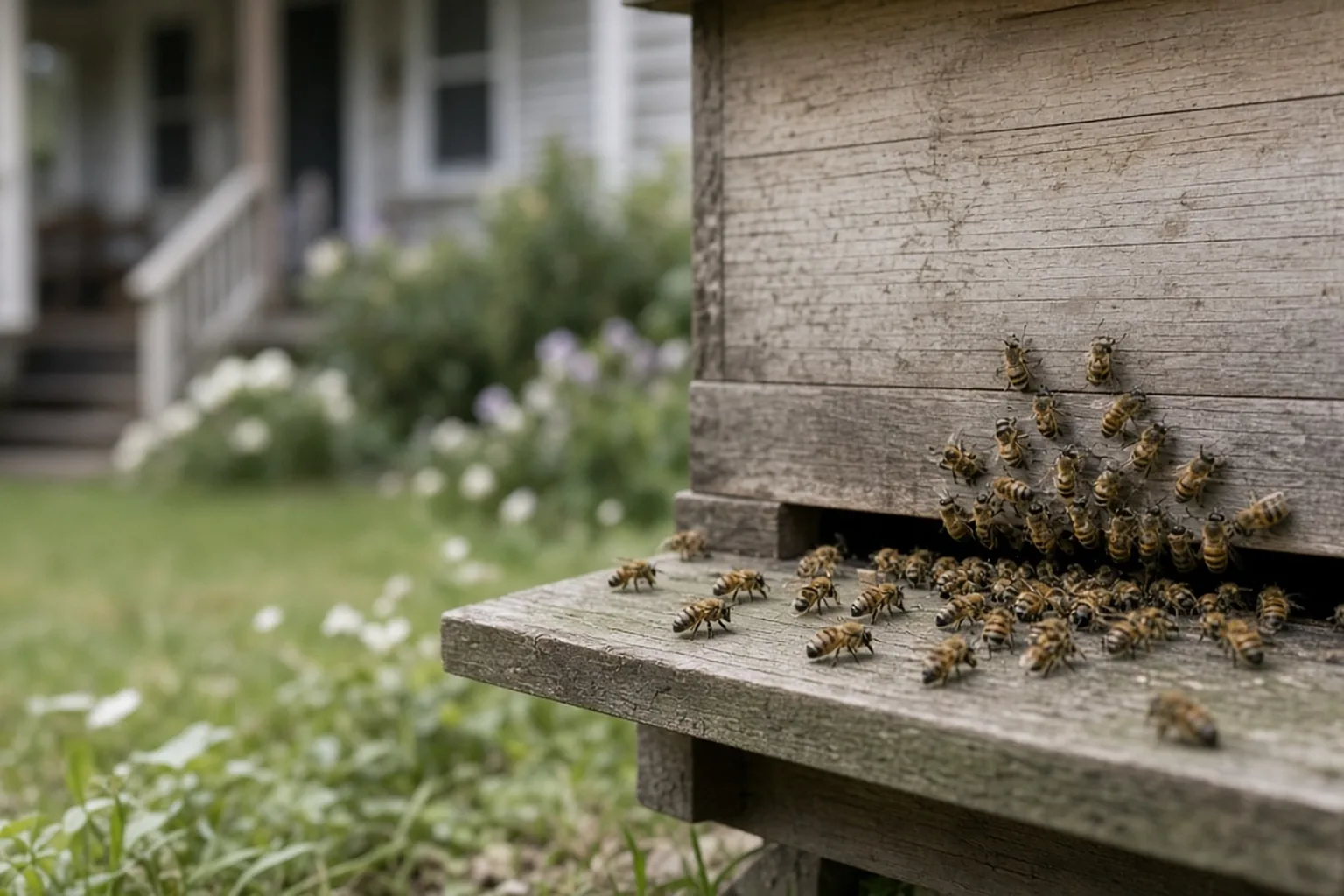
Bees flying in and out of a single gap in the siding, a soffit, a vent or a chimney all day means a colony inside. A few bees at flowers is just foraging.

A hum or a stain indoors

Buzzing inside a wall on warm afternoons, or a dark, sticky stain spreading on a ceiling, points to comb and honey in the cavity behind it.

Neat round holes in wood

Carpenter bees drill holes about the width of a finger in fascia, deck rails and porch ceilings, leaving fresh sawdust below. The big, shiny bees hovering nearby are the males, which can't sting.

When it happens through the year

spring

Spring is swarm season, when colonies split and clusters land on branches and eaves while scouts hunt for a cavity; carpenter bees start drilling bare wood around the same time.

summer

Summer is when a colony that moved in during spring grows fastest, and heat can soften the comb enough for honey to show up as stains on a ceiling.

fall

Fall is the easiest time to seal gaps, screen vents and paint bare wood, once bee traffic has slowed and before next year's scouts arrive.

winter

Winter is quiet, but a honey bee colony inside a wall doesn't leave; it clusters and lives on stored honey, and a few bees may fly on sunny days.

Frequently asked questions

Will the bees be killed, or can they be moved?
It depends on the bee and where it is. A honey bee swarm or a reachable young colony is often collected alive and taken to a beekeeper. A colony deep inside a wall usually has to be cut out, a very defensive colony may be treated, and carpenter bees are treated rather than moved. Ask the pro what they plan to do and why. Nobody can promise live removal before seeing the situation.
How much does bee removal cost?
A swarm hanging in the open is the quickest and cheapest job. A colony inside a wall costs more because the comb has to be removed, the cavity cleaned and the opening sealed, and any wall or ceiling repair is usually priced on top. Ask for a quote that lists each step so you can compare it with another.
Can I just spray the bees or seal the hole?
Please don't. Spraying a honey bee colony leaves pounds of honey and brood behind to rot, stain and attract ants and rodents. Plugging the entrance traps the bees, and they look for another way out, often into a room. Carpenter bee holes can be plugged and painted, but only after the tunnels have been treated.
Are the bees dangerous?
Most honey bees ignore people unless the nest is disturbed, but a colony near a door, a play area or a walkway deserves respect, and anyone with a known sting allergy should stay well away. Carpenter bee males hover and bluff but can't sting. If a colony seems unusually defensive, say so when you call.
What's the difference between a swarm and a colony?
A swarm is a cluster of bees resting in the open, usually on a branch, while scouts look for a permanent home. It has no comb and is generally calm. A colony has built comb inside a cavity and will defend it. Swarms are quick to collect; colonies take real work to remove.
Will the bees come back after removal?
They can, if old comb or the opening is left behind, because the smell of comb draws scout bees to the same spot. Removing the comb, cleaning the cavity and sealing the gap is what keeps them from moving back in, so ask whether all three are part of the job and what happens if activity returns.

Related services

Ready to talk to a provider?

Describe what you've noticed and ask about an inspection or a quote.

Ask a question or get a quote

Ready to Get Rid of Bees?

Tell us what you’ve noticed and where you need help. Ask about an inspection or a quote.

Or call +1 888 546 7983 to talk about your pest problem.