Bee control options
Find the right help for your bee problem.
Different bee problems call for different conversations. Learn what each service involves and ask about your property.
Ask a question or get a quote ↗ 01
Honey Bee Assessment
Find out whether you have a passing swarm or a colony that has moved in, and what live removal would involve for your situation.
Explore this service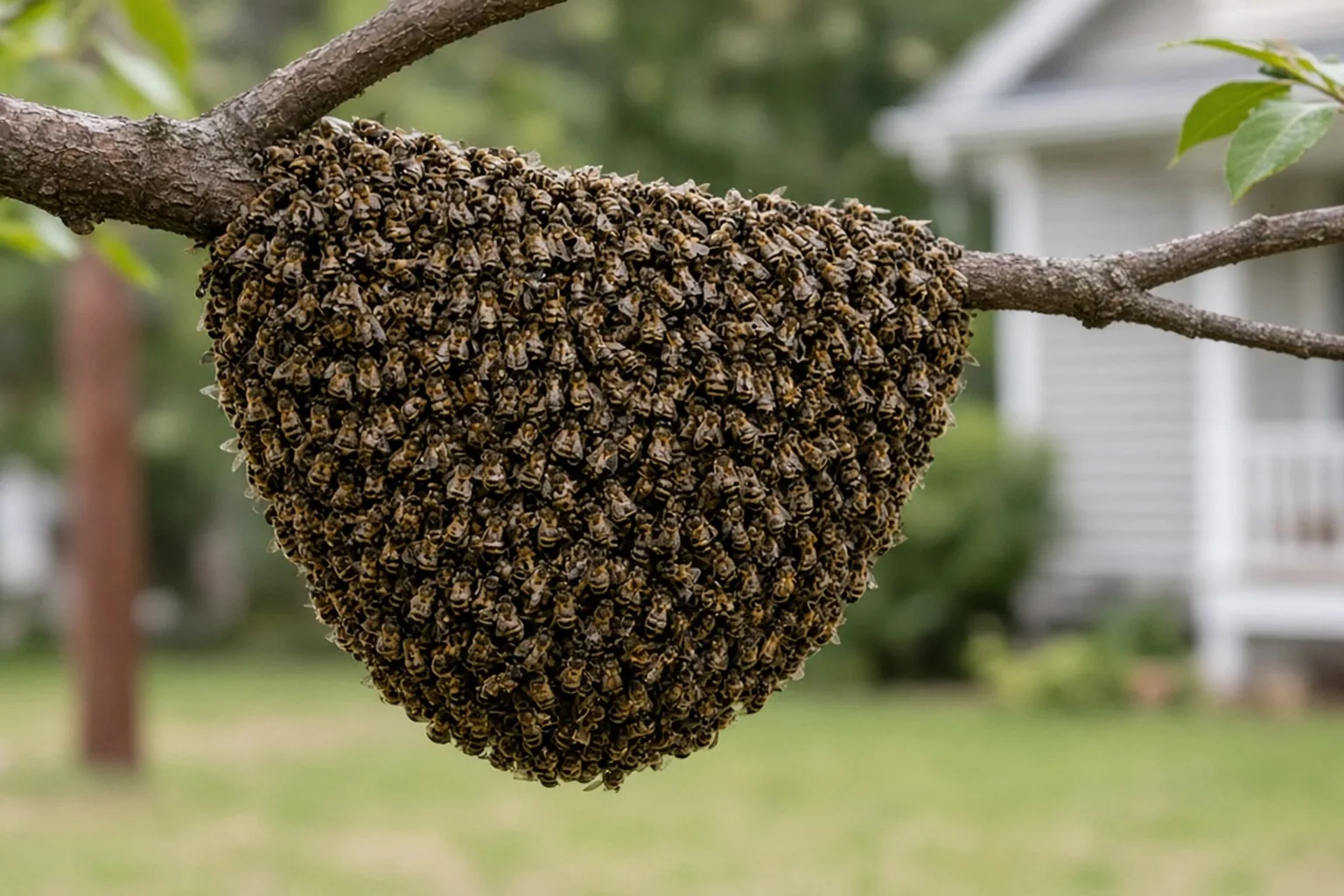 02
Swarm Capture
A cluster hanging in the open is usually calm and often easy to collect, but it can move into a cavity within a day or two, so timing matters.
Explore this service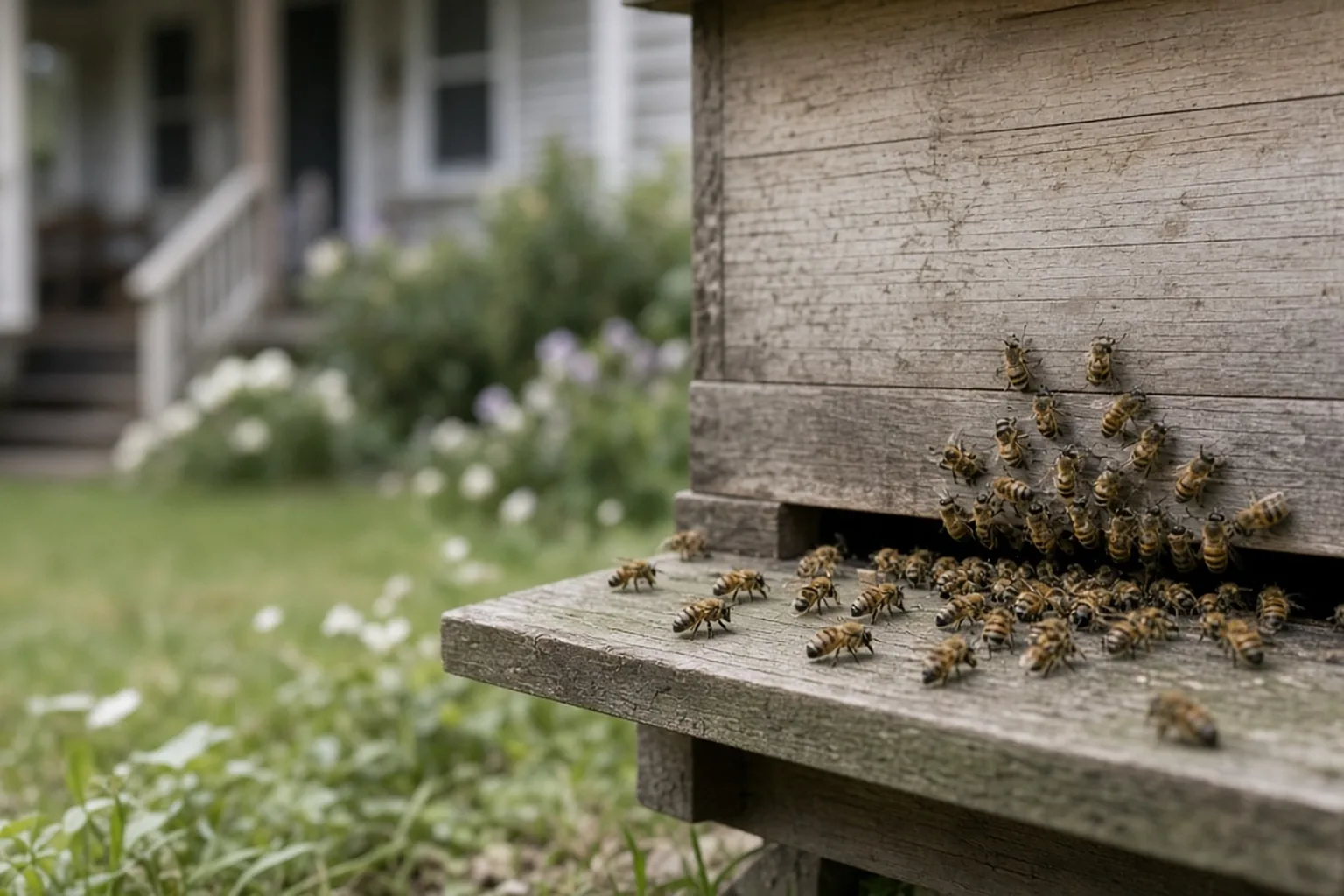 03
Colony Removal From Walls and Roofs
When bees are inside the house, the comb has to come out too. Learn what opening the cavity, cleaning it and sealing it involves.
Explore this service 04
Carpenter Bee Control
Round holes in bare wood with sawdust underneath. Treating the tunnels, plugging them and painting the wood is what stops next spring's drilling.
Explore this serviceWhat to look for
Steady traffic at one spot
Bees flying in and out of a single gap in the siding, a soffit, a vent or a chimney all day means a colony inside. A few bees at flowers is just foraging.
A hum or a stain indoors
Buzzing inside a wall on warm afternoons, or a dark, sticky stain spreading on a ceiling, points to comb and honey in the cavity behind it.
Neat round holes in wood
Carpenter bees drill holes about the width of a finger in fascia, deck rails and porch ceilings, leaving fresh sawdust below. The big, shiny bees hovering nearby are the males, which can't sting.
Frequently asked questions
Will the bees be killed, or can they be moved?
How much does bee removal cost?
Can I just spray the bees or seal the hole?
Are the bees dangerous?
What's the difference between a swarm and a colony?
Will the bees come back after removal?
Ready to talk to a provider?
Describe what you've noticed and ask about an inspection or a quote.
Ask a question or get a quote