The short version
Identify the insect and nesting situation in College Station, TX before choosing removal, relocation, cleanup, repair, or exclusion work.
Property owners and managers comparing bee-removal options in College Station, TX.
What to look for
Visible activity does not identify the species, nest type, or correct scope.
 Flashlight inspection of a door threshold and foundation joint.
How College Station Properties Should Prepare for bee Service
Before a professional visit in College Station, TX, clear access to baseboards, utility areas, kitchens, bathrooms, garages, crawl spaces, and any location where activity has been seen. Take photos of sightings, save damaged materials when safe, and note when the problem is most active. This helps the technician confirm the species, find nesting or entry points, and choose a treatment plan that matches the property instead of relying on a generic spray-and-leave visit.
Questions to Ask Before Booking bee Control
Ask whether the inspection is included, what treatment methods are being proposed, how follow-up visits are handled, and what conditions could change the price. For rental properties, restaurants, hotels, warehouses, and multi-unit buildings, ask whether documentation is provided after service. Strong providers explain the source of the problem, the treatment area, safety instructions, and prevention steps in plain language before work begins.
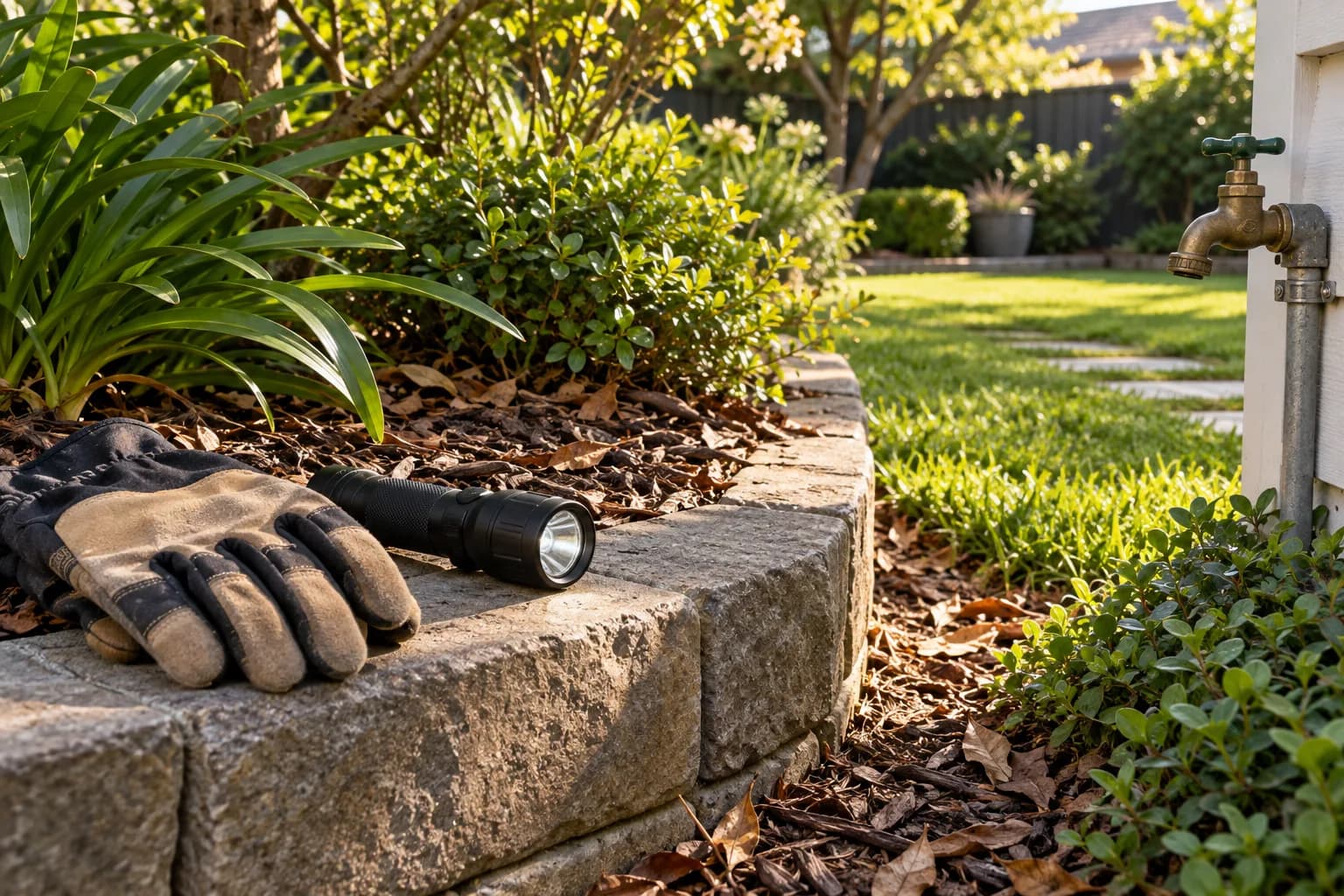 Garden border, leaf litter and outdoor water tap inspection setting.
What Makes College Station bee Problems Different
College Station, TX properties can have different pest pressure from block to block because of building age, landscaping, moisture, trash handling, nearby food sources, and how tightly entry points are sealed. A good inspection does not assume every property needs the same service. It checks the structure, surrounding conditions, activity level, and safety needs before recommending treatment.
Inspection Steps for bee Issues
A complete inspection should look at interior activity, exterior entry points, moisture conditions, food or harborage sources, nearby vegetation, storage areas, and any connected units or shared walls. The best inspection notes where activity is confirmed, where it is suspected, and what needs to change after treatment so the same issue does not return quickly.
Follow-Up and Prevention Plan
Professional pest control should not stop at one visit when the infestation risk is ongoing. Follow-up timing depends on the pest, severity, season, property type, and whether sanitation or exclusion work is still needed. A practical prevention plan may include sealing entry points, improving drainage, trimming vegetation, changing storage habits, and monitoring activity after service.
When to call for help
Use a qualified provider for structural, elevated, defensive, or uncertain activity.
What you can do yourself
Observe from a safe distance; do not spray, open a wall, or seal an active entrance.
Bees in College Station
City selection is based on the U.S. Census Bureau Vintage 2025 incorporated-place ranking.
Local research
Bees in College Station, TX: what the public record shows
Before you compare quotes, it helps to know which bees actually live in Texas, when they are busiest around College Station, and what the state figures look like. Everything below links to the agency or university page it came from.
Honey bee colonies, January 1, 2026 (operations with five or more colonies)
Managed hives are the source of the spring swarms that end up in homes and trees; the state table is on page 7 of the report.
USDA National Agricultural Statistics ServiceAfricanized honey bee arrival
AHB 'have interbred with wild European honey bees and have spread throughout Texas', so any feral colony in Texas should be treated as potentially defensive.
Texas A&M AgriLife ExtensionBee species recorded in Texas
- Western honey bee (European honey bee) (Apis mellifera) — Managed colonies are surveyed by USDA NASS in the listed states; swarms leave hives in spring and move into wall voids, chimneys, and trees. If a colony is killed and not remove…
- Africanized honey bee (Apis mellifera scutellata hybrids) — Visually indistinguishable from European honey bees; far more defensive and swarm more often. 'They entered Texas in 1990, Arizona and New Mexico in 1993, and California in 1994…
- Eastern carpenter bee (Xylocopa virginica) — Large black-and-yellow bee with a shiny bare abdomen that bores round, about 1/2-inch tunnels into unpainted softwood trim, decks, fascia and railings. 'There is only one specie…
When bees are busiest around College Station
'Swarming usually occurs in the spring or summer' (Texas A&M AgriLife); Fort Bend Extension notes reproductive swarms 'usually happen in the springtime when forage is plentiful'. Carpenter bees are active from early spring.
'According to state law, if you are paying someone to remove a honey bee nest, the person must be a registered beekeeper or a licensed pest control professional' (Texas A&M AgriLife). TAIS 'DOES NOT license or issue permits to remove honey bees' but publishes a county list of permitted removers. Bee-proof by blocking pipe and wiring penetrations, weep holes, and knot holes with caulk or screen.
Rules that apply in Texas
For context, nationally
- 788 deaths (an average of 72 deaths per year) — Sting deaths, hornets/wasps/bees, 2011–2021. CDC MMWR
- 84% — Share of sting deaths among males, 2011–2021. CDC MMWR
Sources: Honey Bee Colonies (August 2026); Texas A&M AgriLife Extension; CDC MMWR; African Honey Bee, Africanized Honey Bee, Killer Bee (EENY-429 / IN790); Carpenter Bees. Figures are quoted as the source prints them. How we check our sources
 Kitchen table with a blurred service estimate, pen, glasses and mug.
Sources (2)
The facts in this article come from the public sources listed above. Every home is different, so ask the company you talk to about pricing and what’s included. Published by Beehive Removal · Updated September 1, 2026 · How we write these guides